


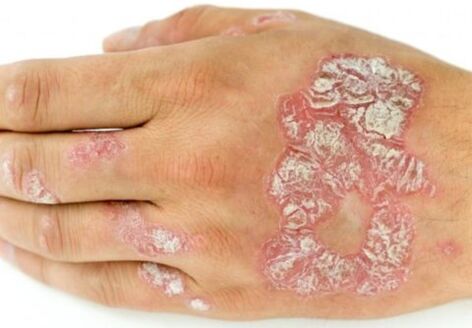
Psoriasis is a disease whose mechanisms of occurrence are not yet fully understood.However, it is precisely established that a number of breakdowns occur in the immune system, as a result of which skin cells begin to divide at a very high rate, without having time to die physiologically.Thus, a psoriatic plaque begins to form - an itchy formation covered with whitish scales (the cells themselves, whose life cycle turned out to be too short).
An accurate diagnosis can only be made by a dermatologist after an examination, but knowing the characteristics of the stages of the disease will help to draw the first conclusions about the nature of the skin changes that appear.
Psoriasis or not?
The disease goes through 3 stages:
- Progressive.The onset of the disease can be sudden and can be preceded by severe stress or hormonal imbalance.A small reddish spot the size of a pinhead appears on the skin.Gradually, the surface of the changed skin rises - this is a papule;silvery scales of keratinized skin are visible on it.The papules are united in plaques, the skin is very itchy, and when combed it becomes wet due to injury to the surface layer.
- Stationary.After some time, the pathological process stops.No new spots and papules appear;the existing plaques are covered with a gray scaly crust that peels off easily.This period is characterized by a decrease in the inflammatory process, a gradual disappearance of itching, but the symptoms do not disappear completely.
- Regressive.At this stage, a reduction and sedimentation of the plaques is noticed, the skin acquires a shade close to normal.Peeling and itching disappear.After the resorption of the pathological elements, pigmented patterns in the form of a ring remain on the skin, which is due to the uneven disappearance of plaques from the central part.After a few weeks, the last traces of spots and papules disappear, only mild foci of depigmentation are reminiscent of psoriasis.
The duration of the described stages may vary for each patient.The regressive stage does not show recovery - exacerbation can begin unpredictably and suddenly.
How to recognize psoriasis at an early stage?
Therapeutic measures for psoriasis give the best effect at an early stage, which explains the special importance of an accurate diagnosis.Whether it is psoriasis or another disease can only be judged by a dermatologist after examination and research.However, the patient himself may suspect this pathology if he pays enough attention to the emerging symptoms.
The following signs are more likely to indicate the development of this disease:
- The first plaques appear on the elbows, knees, hairline or where the skin experiences the greatest friction or contact with clothing;
- the rash is accompanied by severe itching, the silvery scales easily peel off from the surface of the skin;
- after removing the scales, slightly moist skin with blood spots is found (symptom of spot bleeding);
- later on the nails often appear small indentations, as if made by the tip of a needle.
Psoriasis can easily be mistaken for various types of lichen, dermatitis and eczema, so at the first changes on the skin, it is better to consult a dermatologist in order not to harm yourself with inappropriate products.The prescribed complex treatment suppresses the uncontrolled reproduction of epidermal cells, reduces itching and peeling, restores the barrier function of the skin and protects against infections.